
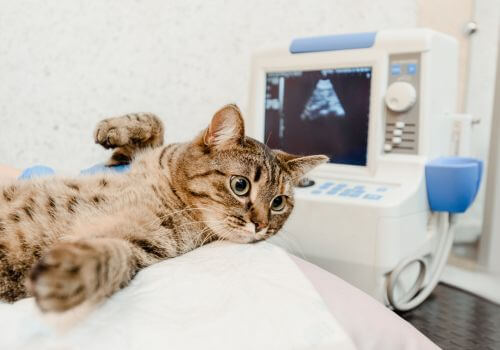
 Just like people, cats often need to undergo various tests when suffering from an illness or injury. Diagnostic imaging is a huge part of veterinary medicine, and it allows us to figure out what is happening inside our patients' bodies. This is extremely important since cats obviously cannot speak for themselves and tell us what's wrong. When it comes to something as crucial as cat diagnostic imaging, your veterinarian is the best person to turn to for information. Here at Forest Grove Veterinary Clinic, we understand that you need accurate information so you can do what's best for your feline friend. That's why we decided to create this resource to answer some of the most frequently asked questions about diagnostic imaging. It's essential to be able to know when your cat is in pain, as felines can be particularly stoic.
We still encourage you to consult with your own veterinarian if you have questions about your cat's health. If you don't have a veterinarian and are searching for one in Saskatoon, Saskatchewan, we'd love to help. Call (306) 955-6111 to schedule an appointment.
What is cat diagnostic imaging?
Diagnostic imaging is the use of images to diagnose a disease process or injury. In some instances, we also run tests to monitor a cat's ongoing health as a part of their routine wellness care and to look for early warning signs of trouble. These tests are completely painless and typically non-invasive. As veterinarians, we rely on several different types of diagnostic imaging when determining what's going on with a patient.
Diagnostic imaging tests for cats include:
- X-ray
- Ultrasound
- CT scans (Also known as cat scans)
- MRI
These technologies provide us with the information we need to diagnose conditions and begin appropriate treatment promptly. In most cases, we can determine what's going on with your pet using x-rays or ultrasounds. MRI and CT scans cost substantially more and require referrals (sometimes even to a different province!), so we use them less frequently.

How does the use of diagnostic imaging help veterinarians identify health issues in my cat?
Diagnostic imaging serves several purposes and helps us identify health issues in cats in several ways. For example X-rays allow us to examine bones, lungs, and even count the number of fetuses in a pregnant cat. Unfortunately, X-rays are not good at assessing the finer details of the abdominal organs of kitties. On the other hand, that is where ultrasound shines! Ultrasounds are great at examining fluid filled organs – like the kidneys, liver, or heart. Overall, diagnostic imaging allows us to safely peer deep inside your pet's body to identify health issues.
What are some possible conditions that are diagnosed using cat x-rays?
We use x-rays to diagnose numerous health conditions in cats.
X-rays help us detect a wide range of issues, including:
- Broken bones
- Cancerous tumors
- Periodontal disease
- Tooth damage
- Intestinal blockages
- Bowel obstructions
- Bladder stones
- Pregnancy
What are some possible conditions that are diagnosed using cat ultrasound?
We use ultrasound to diagnose numerous health conditions in cats.
Ultrasound help us detect a wide range of issues, including:
- Cancerous tumors
- Intestinal blockages
- Inflammatory bowel disease
- Bowel obstructions
- Kidney disease
- Adrenal disease
- Bladder stones
- Fluid in the abdomen
- Heart disease
- and many others
What to expect for my cat to get an X-ray or ultrasound?
If your veterinarian has recommended an X-ray or ultrasound to further assess your cat's health, here's what you can expect during the process.
To obtain clear, accurate images, your veterinarian may recommend light sedation. X-rays and ultrasounds provide the most helpful information when your cat is lying perfectly still and positioned correctly. Because cats don't always understand what we're asking of them, sedation helps reduce stress and anxiety during the procedure. It also helps keep pets comfortable - especially if they are experiencing pain - so they can rest easily in the positions needed without discomfort.
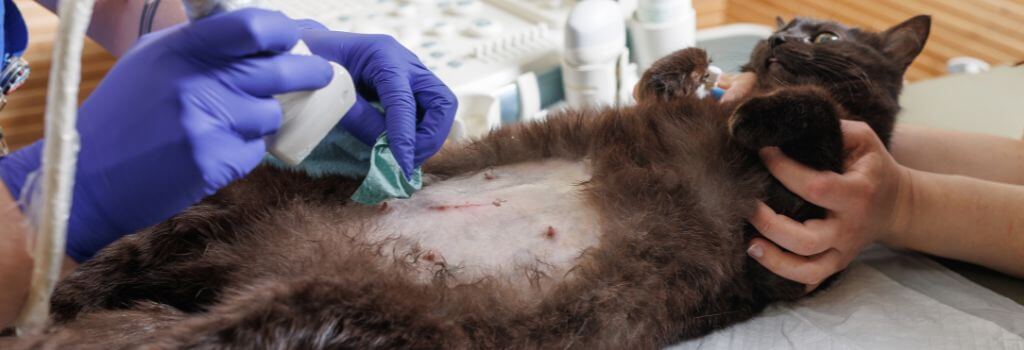
If your cat is scheduled for an ultrasound, the area being examined will likely need to be shaved. Fur can interfere with the ultrasound waves and reduce image quality. The good news is that this hair will grow back over time.
We understand that diagnostic procedures can feel overwhelming, but our team is here to prioritize your cat's comfort and safety every step of the way. If you have any questions or concerns, please don't hesitate to reach out - we're always happy to help.
How will a veterinarian decide that a cat needs diagnostic imaging?
We determine when a cat needs diagnostic imaging based on several factors. If you bring your cat in with a limp, we will recommend an x-ray. If they have a suspicious lump in their abdomen, we may recommend an x-ray or ultrasound.
As your cat's veterinarian, we will carefully examine them and discuss their condition with you to determine what types of testing they need. Unfortunately, your cat cannot tell us what's wrong or what hurts. Instead, we have to rely on diagnostic tests to figure out what's going on when there is a problem.
Is diagnostic imaging safe for my cat?
Overall, diagnostic imaging is generally safe for cats and other pets. Although radiation from X-rays can increase the risk of side effects like cancer, most veterinary practices use digital X-ray machines, which emit less radiation than traditional X-rays. Ultrasound and MRI scans are non-invasive and do not use radiation to create images. It is important to note that although diagnostic imaging is generally safe for cats, it should only be performed when necessary to minimize unnecessary radiation exposure.
Why is early detection and diagnosis of health problems in my cat so important?
Early detection and diagnosis are always crucial when it comes to injuries and health problems involving your cat. Whether it's dental disease, a severe wound, a broken bone, or something else, the faster we detect and diagnose it, the sooner we can begin treatment. Determining where the problem is stemming from early on yields the best possible prognosis for your feline friend.
At Forest Grove Veterinary Clinic, your pet is our priority. If you have any questions, don't hesitate to call our team at (306) 955-6111, or you can email us at contact@forestgrovevet.com. Our staff would love to talk with you! Don't forget to follow us on Facebook.