
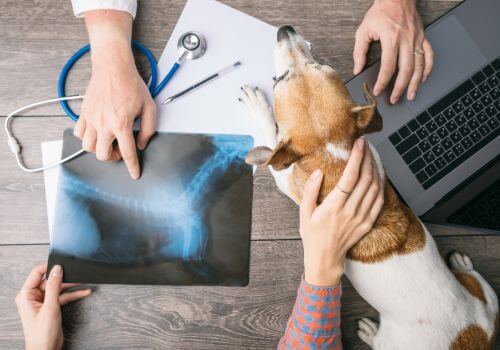
 Dog diagnostic imaging provides your veterinarian with a clear picture of what's going on inside your dog's body and typically involves an x-ray, ultrasound, CT scan, or MRI. These diagnostic tools are critical in providing a definitive diagnosis and treatment plan for the symptoms your dog is experiencing.
If you are located near Saskatoon, Saskatchewan, we are here to answer your questions and provide any diagnostic testing your dog may need. Please feel free to reach out to us at (306) 955-6111.
How does diagnostic imaging help diagnose my pet?
Diagnostic imaging helps us see what's happening inside your dog when they are exhibiting certain symptoms. At Forest Grove Veterinary Clinic, we look for things that are abnormal or out of place. Diagnostic imaging is a safe and noninvasive way for us to look inside your dog without causing them discomfort.
What are the different types of diagnostic imaging?
The main diagnostic imaging technologies we use at Forest Grove Veterinary Clinic are x-ray and ultrasound. If something more involved is needed, such as a CT scan or MRI, we will send your dog to a specialty hospital where that equipment is readily available, along with a specialist or veterinary radiologist. The type of diagnostic imaging used is based on what your veterinarian is trying to diagnose.
Dog diagnostic imaging includes:
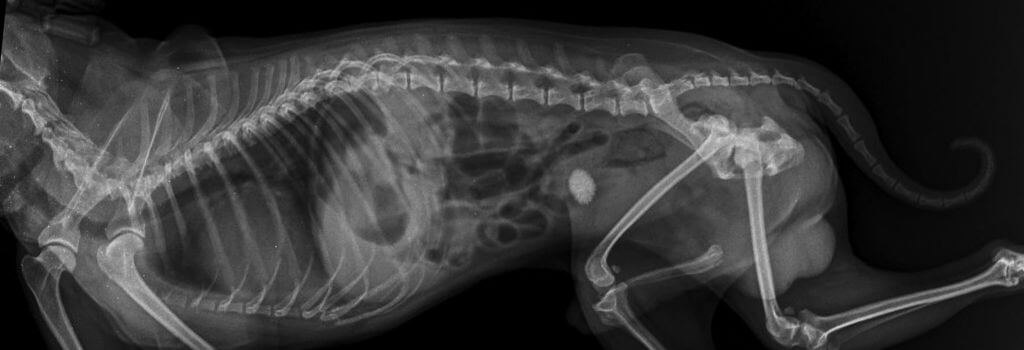
- X-rays for dogs – It allows us to evaluate bones for signs of skeletal abnormalities and can also be helpful in assessing the lungs and heart
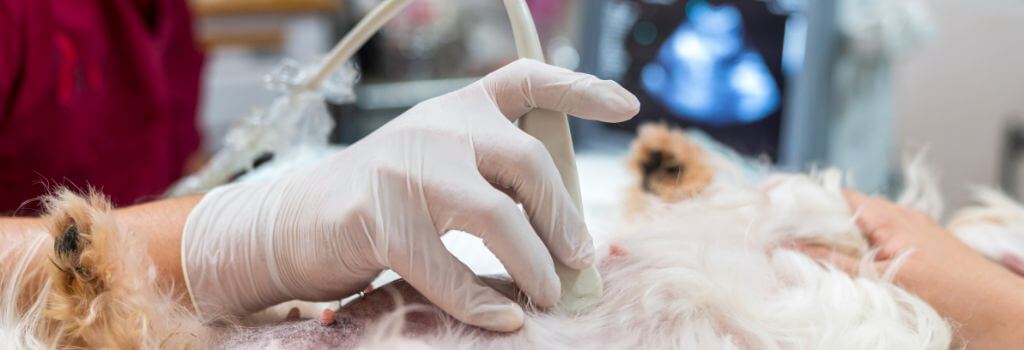
- Dog Ultrasound – Used to have a more detailed look at your dogs abdominal organs such as the liver, intestines, kidneys, and bladder
- Dog CT and MRI: More advanced imaging that can provide information on the brain, spine, and other very fine detail anatomy
What does a veterinary radiologist do?
A veterinary radiologist has received additional education following veterinary school to become certified and specialized in all forms of diagnostic imaging and interpret the images to provide a definitive diagnosis. Your veterinarian may refer you to a veterinary radiologist at a specialty hospital if a suspected condition requires advanced imaging such as a CT scan or MRI. In more complex cases, your veterinarian may also recommend having X-ray or ultrasound images taken in-clinic and reviewed by a radiologist to ensure all relevant information is identified for your dog.
The American College of Veterinary Radiology offers more insight into when your dog might need a veterinary radiologist and the various specialties.
What are some of the things that diagnostic imaging looks for?
Diagnostic imaging serves many purposes. We use it for a closer look at areas that may help explain the symptoms your dog is presenting. While x-ray is helpful, ultrasound is more sensitive and specific for conditions that we can't see with an x-ray.
Dog diagnostic imaging looks for:
- Heart and lung abnormalities
- Tumors on organs
- Foreign objects in the intestinal tract
- Disease or masses inside the organs
Is diagnostic imaging safe for my dog?
Diagnostic imaging is completely safe for your dog. Since veterinarians do x-rays so infrequently on a dog, the level of radiation exposure is minimal and therefore very safe. Ultrasound imaging is also safe and is the same technology used for imaging babies in the womb. Diagnostic imaging is an effective way to learn more about what's going on inside your pet without an invasive procedure.
Will my dog need to be sedated for diagnostic imaging?
At Forest Grove Veterinary Clinic we recommend light sedation for most dogs undergoing X-rays or ultrasounds. To obtain the clearest and most accurate images, your dog needs to lie perfectly still in a very specific position. Depending on the reason for the imaging, these positions may be uncomfortable - especially if your dog is already experiencing pain. Additionally, many dogs find it stressful to remain still on a raised exam table.
Light sedation helps reduce fear, anxiety, and stress, and it also keeps your dog comfortable during the procedure. This allows us to safely position them without causing unnecessary discomfort and ensures we get the best diagnostic information possible. The sedation we use is safe, reversible, and carefully tailored to your dog, making the experience much more pleasant than attempting imaging without it.
If you have any questions or concerns about sedation or the imaging process, our team is always happy to discuss them with you. Don't forget to follow us on Facebook.