
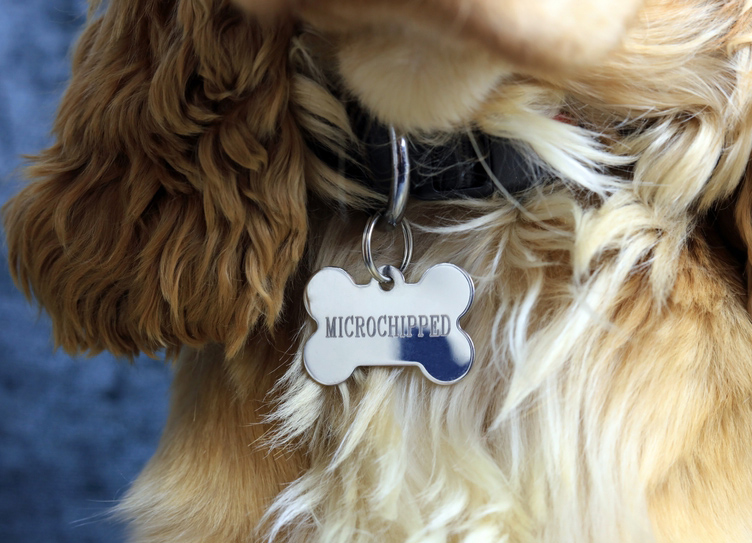
 As a loving pet parent, losing your dog is likely one of your worst fears. Unfortunately, even when they have the most astute owners, dogs get lost every day. To protect your canine companion, we recommend having them microchipped. Here at Forest Grove Veterinary Clinic, we provide dog microchipping for pets in Saskatoon, Saskatchewan and strongly recommend this service for our patients.
We have answered some of the most frequently asked questions about microchipping your dog here, but if you have additional questions about microchips for your dog, and are in the Saskatoon, Saskatchewan area, please give us a call at (306) 955-6111 to schedule an appointment.
What does it mean to have my dog microchipped?
Having your dog microchipped gives them a permanent form of identification. While collars and tags can fall off or wear out, we implant microchips under the skin between a dog's shoulder blades, where they remain for the rest of their lives.
Is microchipping painful or dangerous for my pet?
Most dogs handle the microchip implant very well. The implant is placed using a needle that is slightly larger than the one used for routine vaccinations. The microchip, which is about the size of a grain of rice, is injected just under the loose skin between the shoulder blades. To make the procedure as comfortable as possible, we often recommend implanting the microchip at the time of spay or neuter surgery. If that is not an option, we will apply a numbing cream prior to implantation and may ask you to bring your pet in with pre-visit pain or anxiety medications to help make the experience as positive as possible.
Why Does My Pet Need a Microchip if They Already Have a Collar With a Tag?
Collars and tags can easily be lost or removed, but a microchip is a permanent form of identification that stays with your pet for life. This is particularly important if you plan to travel internationally with your dog, as a microchip is often required for health certificates. At Forest Grove Veterinary Clinic, we recommend microchipping as an extra layer of security for your pet's safety.
Do microchips have tracking capabilities?
Currently, microchips do not have GPS tracking capabilities. As radio-frequency identification devices, they don't emit a signal or require a power source. There are GPS trackers you can attach to your dog's collar for this purpose, but you cannot track your dog's location using their microchip.
How is a microchip used to identify my dog?
Every microchip has a unique identification number. After inserting the chip, it is registered to your dog using your personal information.
When registering your dog's microchip, we'll input several pieces of information, including:
- Your phone number
- Your address
- Your email address
- Additional contact information for another person
Who can scan my dog's microchip information?
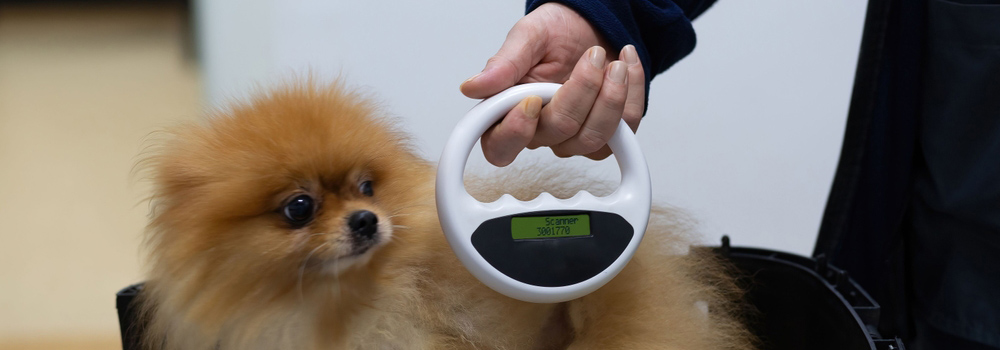
Most veterinary hospitals and animal rescue agencies have microchip scanners. These are typically universal scanners that will detect chips from any manufacturer.
What does the microchip recovery process look like in the event my dog gets lost?
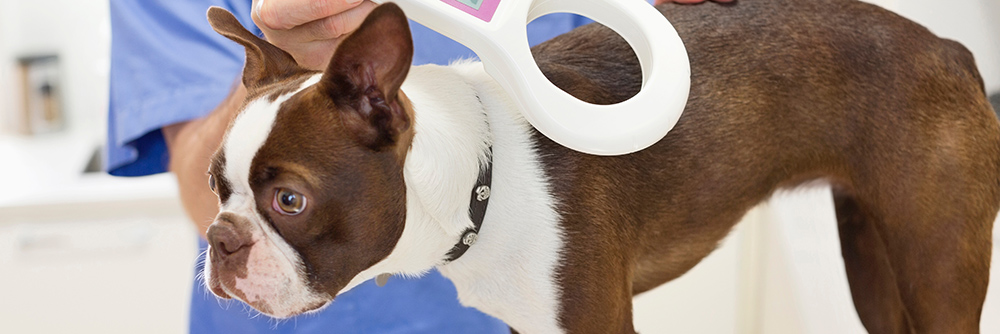
If someone picks up your dog and brings them to a veterinary hospital or shelter, an employee will scan them for a microchip using a non-invasive handheld device. The scanner will display the identification number, which they will enter into an online database to determine the manufacturer. Then, the employee will contact the microchip manufacturer to find your contact information. As long as the microchip contains current contact information, someone will reach out to you to reunite you with your canine companion.
Why do veterinarians recommend that you get your dog microchipped?
We recommend having your dog microchipped because it provides a permanent, fail-safe form of identification. It is also a legal form of identification, so if your dog's chip contains accurate information, there is no denying that they belong to you. Microchipping dramatically increases your chances of reuniting with your precious pet if they are ever lost or stolen, so we strongly recommend this simple procedure for the peace of mind it provides.
What if I lose or forget my dog's microchip information?
This is a common problem with an easy solution. If you forget or lose your dog's microchip information, you can contact the company or log into their website. Alternatively, you can bring your pet into our office or a shelter, have them scanned, and write down the number. If we chip your dog and you lose the information, we'd be more than happy to help.
Are there any other smart products that can connect to my dog's microchip?
Right now, there are a few smart products that connect to dogs' microchips, and more are being developed. The only products you can currently connect to your dog's microchip include smart pet feeders and dog doors.
Microchip pet feeders only open for a specific pet and are ideal for multi-pet households in which some animals have special diets. Microchip dog doors allow your canine companion to come and go as they please while keeping unwanted critters out.
Pet tech is evolving rapidly, so be on the lookout for additional microchip-compatible smart products in the near future!
To learn more about dog microchipping or schedule an appointment for your canine companion, please reach out to our friendly team. Microchipping takes seconds and could save you and your dog from years of heartache.
At Forest Grove Veterinary Clinic, your pet is our priority. If you have any questions, don't hesitate to call our team at (306) 955-6111, or you can email us at contact@forestgrovevet.com. Our staff would love to talk with you! Don't forget to follow us on Facebook.